
A Guide to Egypt’s Weather: What to Expect Year-Round

The land where history comes alive, the land where the Red Sea is a wonder in its own right, the land where you can be exploring the historical and cultural roots of Ancient Egypt one day, and then relaxing on the beach with a cocktail in hand the next.
The land where the sun is always shining, the weather is warm, and the water is perfect. But what can you truly expect from the weather in Egypt? How can you plan your trip to ensure you get the best experience for you?
This guide will give you the information to know exactly what is right for you, so whether you are planning on doing a Nile cruise, exploring all of the historical spots, relaxing on the beach, or diving until your heart is content, you will get the answers you need.
The Climate in Egypt
It goes without saying that the climate in Egypt is hot. Much hotter than that of the Western world, this is not only due to the location and it being close to the equator but, due to its desert climate, it means that even when it reaches the high temperatures, it is a dry, comfortable heat (if you like the heat anyway, that is).
Meaning that the summers are hot and dry, the winters are mild and dry, and rain happens twice a year. And, when it rains, it pours.
The most important thing to know is that the condition of the weather depends on where you are in the country. Regional climate is very real in Egypt.
The northern coastal areas along the Mediterranean tend to be more temperate and humid, while central and southern Egypt, particularly areas around Luxor and Aswan, are much drier and hotter.
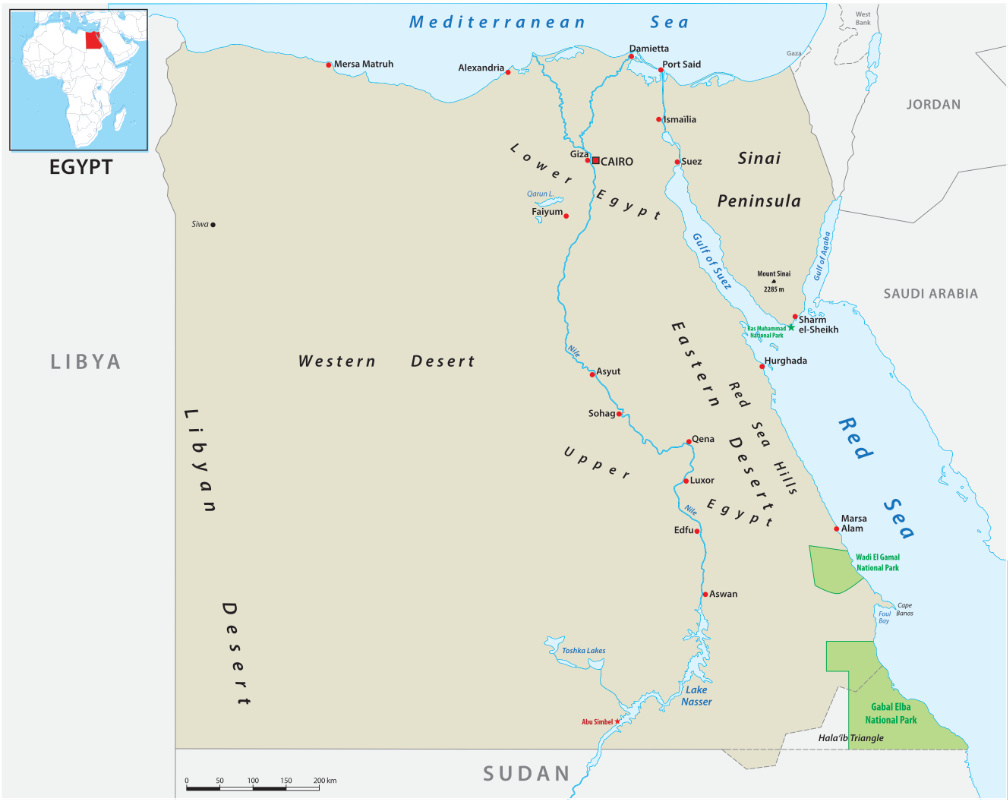
Map of Egypt
Let's break down the regional areas
Cairo and the Nile Valley
- Hot summers and mild winters
- Light winter rain possible
- Smog and pollution can worsen the heat in summer
Making exploring the pyramids and ancient treasures most comfortable in the cooler months.
Alexandria and the Mediterranean Coast
- More moderate temperatures year-round
- Receives the bulk of Egypt’s rain (mostly in winter)
- Higher humidity levels due to proximity to the sea
Great for a beach getaway; however, as well as higher humidity, the waves on Alexandria’s coast are pretty strong and big, so only recommended for strong swimmers.
Luxor and Aswan (Upper Egypt)
- Among the hottest places in Egypt
- Minimal rainfall all year
- Excellent for winter travel due to consistently sunny skies
The best time of year to travel and see the Valley of the Kings and temples would be the cooler months – summer is very hot and may make it difficult to be on your feet all day.
Sinai Peninsula
- Diverse microclimates: coastal cities are warm; mountainous areas (like St. Catherine) can get snow in winter
- Sharm El Sheikh and Dahab offer stable weather for diving and beach trips
Summer in this area is amazing, with clear warm waters making diving an extremely comfortable experience. Winter in this area is also amazing, with a contrast of snow and desert; you get a collision of worlds.
Western Desert and Oases
- Very dry and hot, with dramatic temperature drops at night
- Spectacular starry skies due to a lack of light pollution
- Great in winter and early spring
Best to go in late summer or autumn as the waters are a perfect temperature, the daytime temperature is not too high, and the nights are warmer than in the winter months when it can reach freezing.
With each area’s climate in mind, here is what to expect throughout the year:
1. Winter (December to February)
- Average temperatures: 9°C to 20°C (48°F to 68°F)
- Weather: Mild and occasionally cool, especially in the evenings
- Rainfall: Most rainfall occurs now, but it’s still sparse outside coastal cities
Winter is considered one of the best times to visit Egypt. Cairo and Alexandria are pleasant, while southern cities like Luxor and Aswan are warm enough for sightseeing without the scorching heat. Nights can get surprisingly cold in the desert, so bring a jacket or layers.
2. Spring (March to May)
- Average temperatures: 15°C to 30°C (59°F to 86°F)
- Weather: Warm with increasing heat toward May
- Special condition: Khamsin winds – hot, dry, and dusty winds blowing from the south, usually occurring from March to May
Spring is beautiful in Egypt, but travellers should be aware of the Khamsin winds, which can reduce visibility and cause dust storms. These winds are unpredictable and may last a few hours to several days.
Despite this, the weather is generally pleasant, especially in March and April. Outdoor activities are comfortable, and the landscape is still relatively green after the cooler months.
3. Summer (June to August)
- Average temperatures:
-
- Cairo: 22°C to 35°C (72°F to 95°F)
- Aswan/Luxor: 25°C to 42°C (77°F to 108°F)
- Weather: Extremely hot and dry, particularly in Upper Egypt
- Rainfall: Virtually none
Summers in Egypt are intensely hot, especially in the south. If you can handle high temperatures, the upside is that there are fewer tourists and better travel deals. Coastal regions such as Hurghada or Sharm El Sheikh on the Red Sea offer some respite with cooler sea breezes and excellent diving conditions.
4. Autumn (September to November)
- Average temperatures: 17°C to 30°C (63°F to 86°F)
- Weather: Warm, pleasant, and gradually cooling down
- Rainfall: Minimal to none
Autumn is another fantastic time to visit Egypt. The summer heat begins to wane, and most tourist sites are less crowded. The weather is especially enjoyable for sightseeing and desert tours, and the Nile cruises become more popular as temperatures drop.
Choosing the Best Time to Visit
So now you know the details, you can pick the best season and area for you. Keep in mind what it is you want to do on your trip to Egypt, and remember, no matter when you travel, to always use sun cream, drink water, and wear a hat!